Interior
Trends
The Stone of Marrakech
A Guide to Tadelakt and Mineral Textures

Jan 8, 2026
In the world of interior design, "perfectly imperfect" is having a moment. We are moving away from the sterile, plasticized finishes of the last decade and returning to materials that breathe, age, and hold history. Among these, decorative wall plasters are the undisputed kings of texture.
While there are many mineral finishes to choose from, one stands apart for its unique blend of sensual beauty and rugged utility: Tadelakt.
What is Tadelakt?
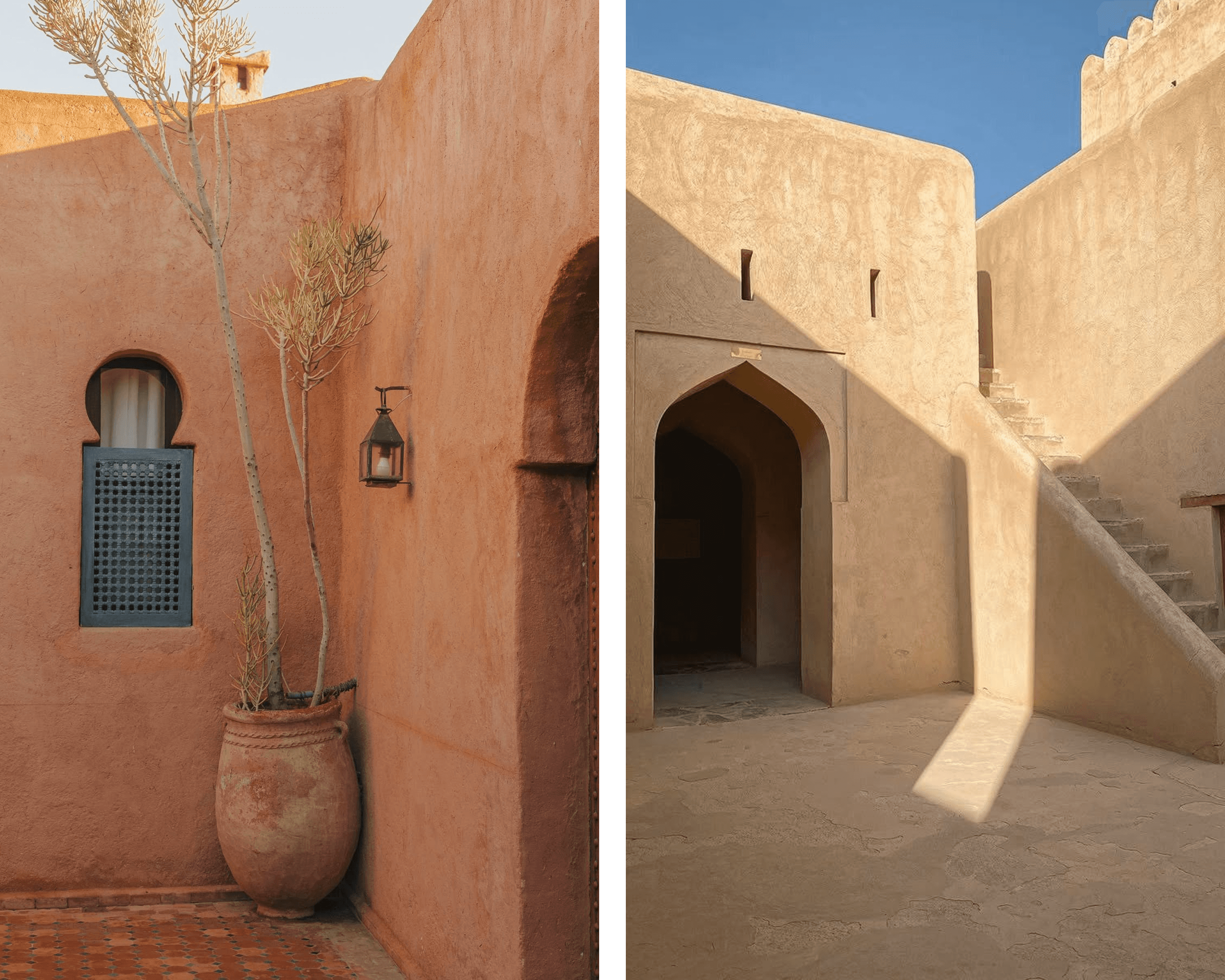
Tadelakt (pronounced tad-eh-lakt) is a traditional waterproof plaster technique that originated in the Marrakech region of Morocco. The word itself is derived from the Arabic word for "to rub" or "to knead," which is a literal description of how the finish is achieved.
Unlike standard gypsum wall plasters used to smooth out drywall, Tadelakt is a lime-based wall plaster. However, it isn't the material alone that makes it special - it is the chemistry and the labor.
The Chemistry of Waterproofing
True Tadelakt is made from a specific lime found in the Marrakech plateau.
Once applied, the plaster is treated with olive oil soap (often black soap).
Here is the science: The olive oil soap reacts with the lime plaster to create calcium stearate. This chemical reaction makes the surface hydrophobic (water-repellent) while remaining breathable (permeable to water vapor).
The Stone Polishing
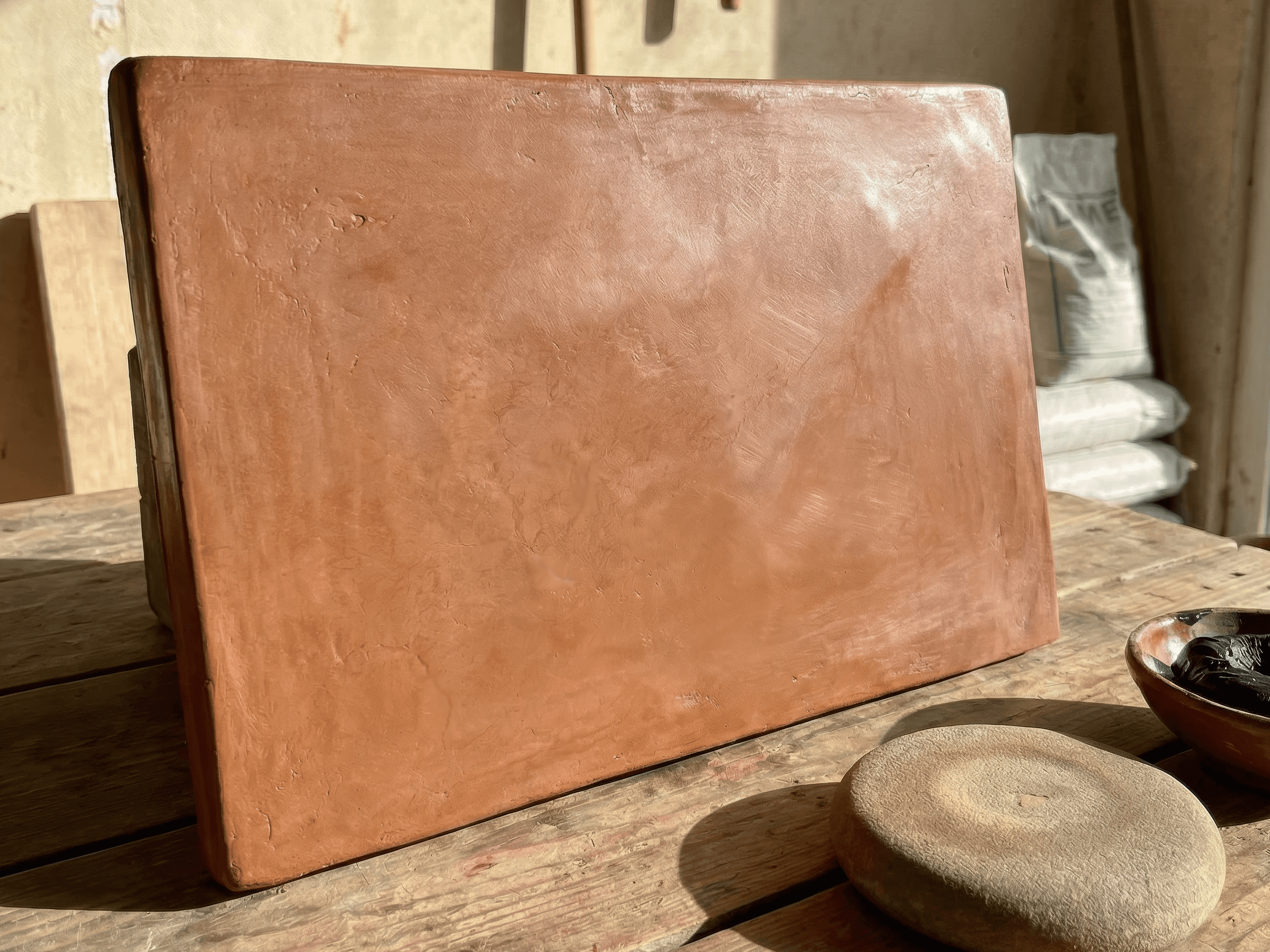
The most distinctive part of the Tadelakt process is the finish. While the plaster is arguably still "alive," artisans use a hard river stone to rub and compress the surface. This stone polishing closes the pores of the plaster, creating a finish that is smooth as silk, hard as stone, and gently undulating to the touch.
The Chemistry of Waterproofing
True Tadelakt is made from a specific lime found in the Marrakech plateau.
Once applied, the plaster is treated with olive oil soap (often black soap).
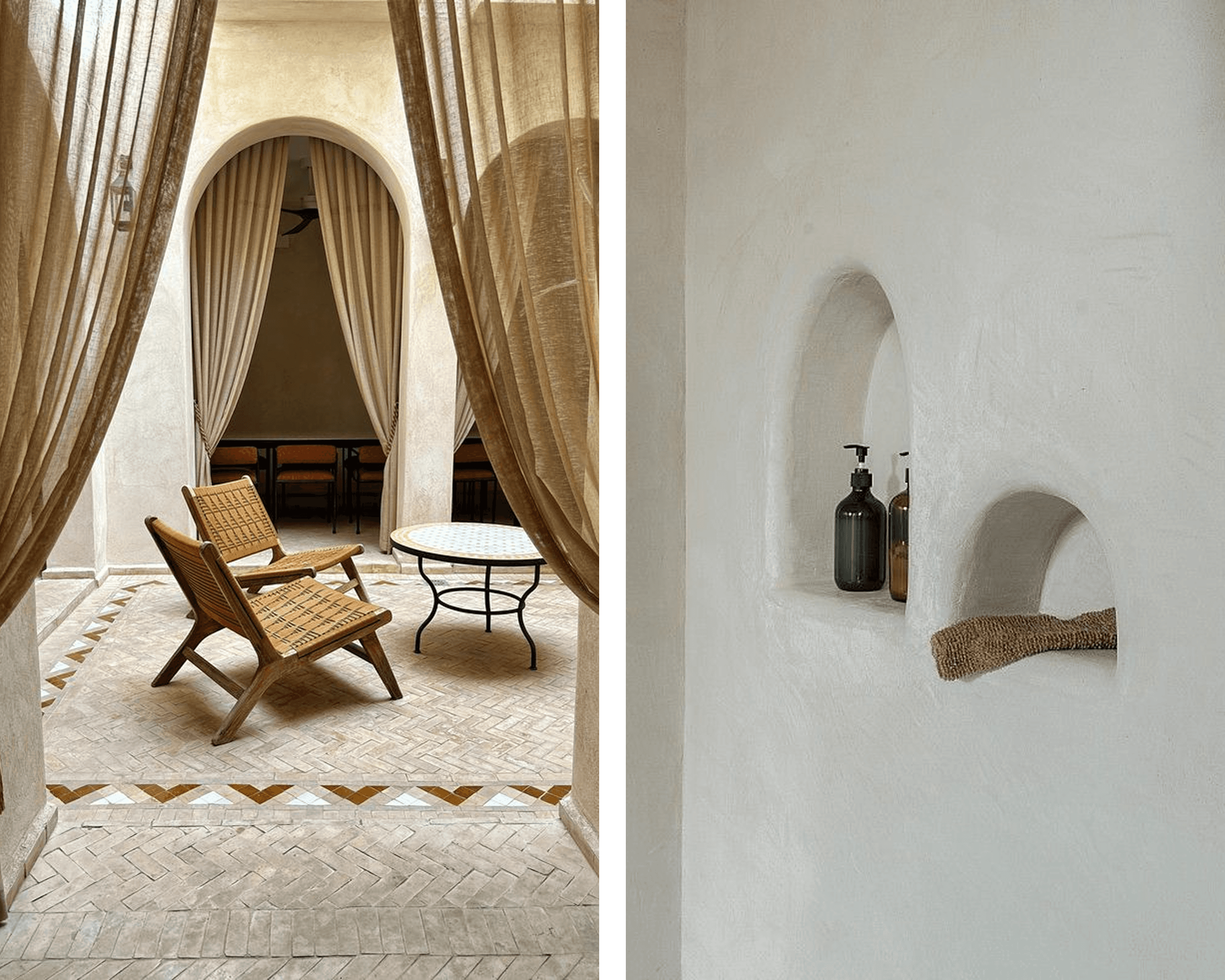
Here is the science: The olive oil soap reacts with the lime plaster to create calcium stearate. This chemical reaction makes the surface hydrophobic (water-repellent) while remaining breathable (permeable to water vapor).
The Stone Polishing
The most distinctive part of the Tadelakt process is the finish. While the plaster is arguably still "alive," artisans use a hard river stone to rub and compress the surface. This stone polishing closes the pores of the plaster, creating a finish that is smooth as silk, hard as stone, and gently undulating to the touch.
Versatility: Where Can You Use It?
Because Tadelakt is naturally waterproof and mold-resistant, it has traditionally been used in Moroccan hammams (bathhouses) and riads. However, modern designers have unlocked its potential for the entire home.
1. Wet Rooms and Showers
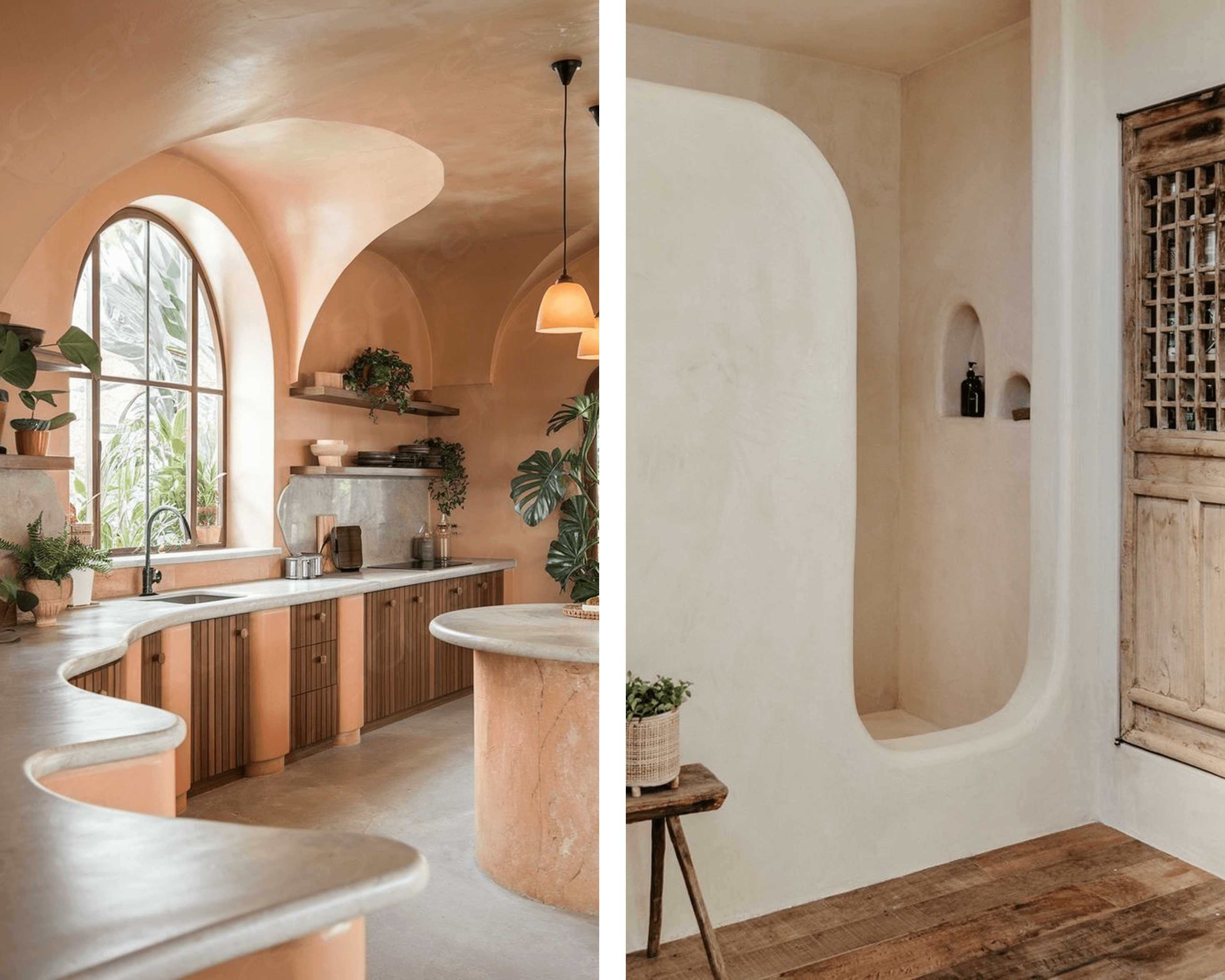
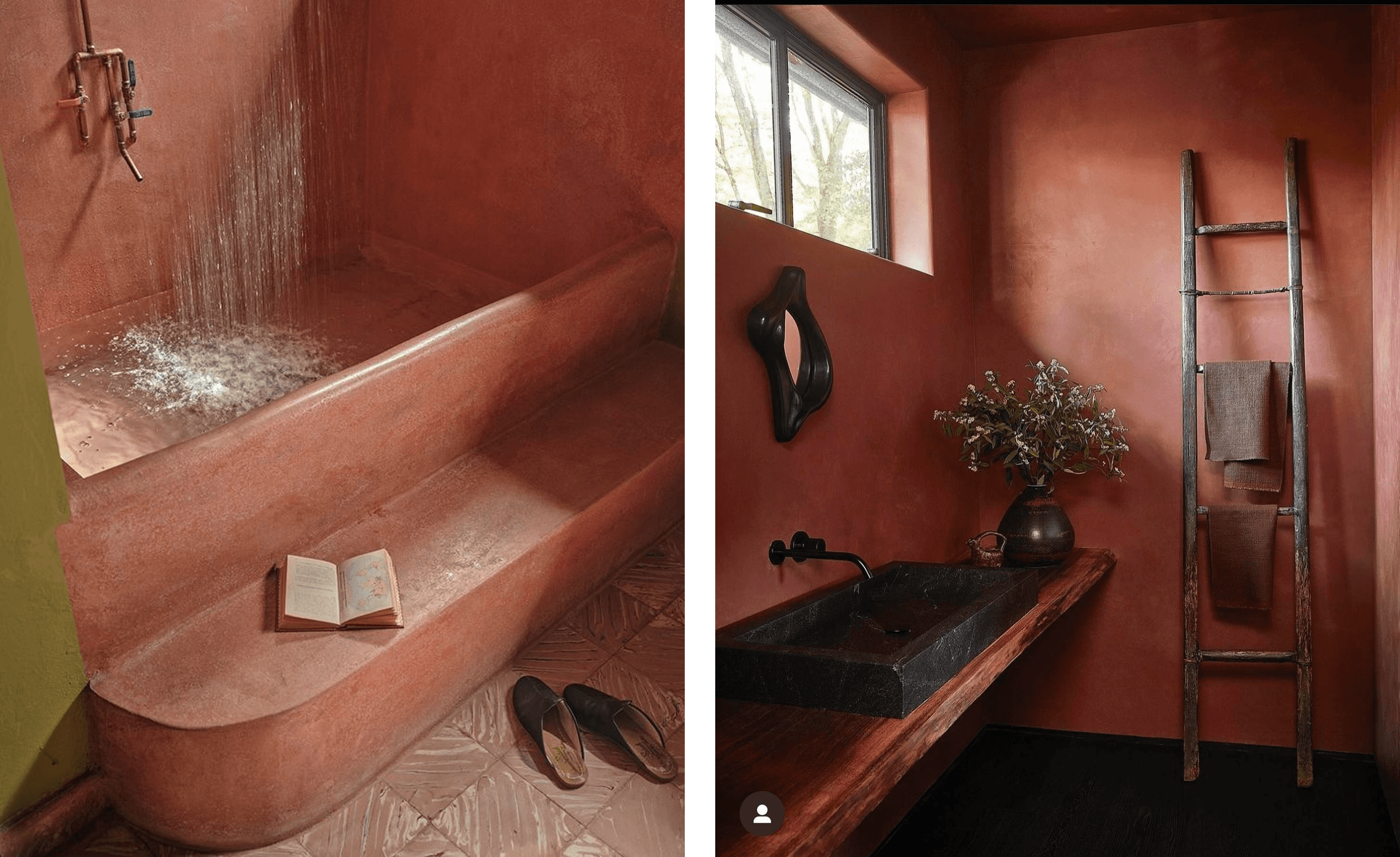
This is Tadelakt’s natural habitat. It offers a seamless alternative to tiles. No grout lines means no grime buildup. It creates a monolithic, spa-like sanctuary that feels soft against the skin, unlike cold ceramic.
2. Sinks and Bathtubs
Because Tadelakt is flexible and adhesive, it can be applied over brick or concrete to create custom, organic shapes. You can sculpt a vanity where the sink basin flows seamlessly into the countertop without a single joint.
3. Curved Surfaces
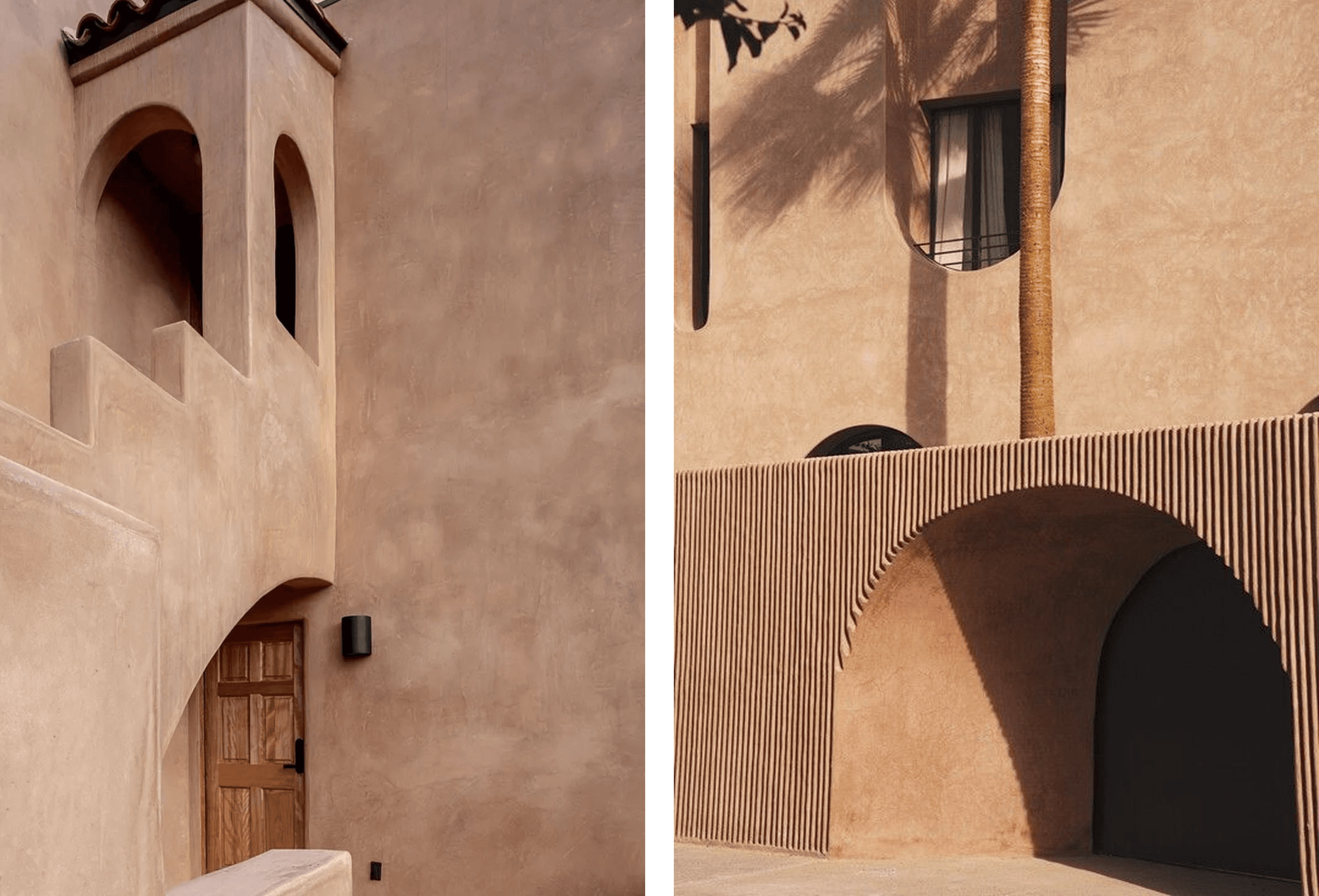
Most rigid materials (tile, stone slabs) struggle with curves. Tadelakt thrives on them. It wraps beautifully around columns, arches, and rounded staircases, creating a fluid, architectural look that softens a room.
4. Statement Walls
You don't need water to appreciate Tadelakt. In a living room or bedroom, it adds a tactile depth that paint simply cannot achieve. It reflects light in a diffuse, velvety way that changes throughout the day.
Tadelakt vs. The Competition: A Comparison
It is easy to confuse Tadelakt with other "plaster-like" finishes, but they perform very differently. Here is how Tadelakt stacks up against the other major mineral wall finishes: Venetian Plaster, Microcement, and Limewash.
1. Tadelakt vs. Venetian Plaster
Venetian Plaster is an Italian finish made from fired limestone and crushed marble dust.
The Look: Venetian plaster is often highly polished to a glass-like sheen. It has a visual depth created by overlapping thin layers. Tadelakt has a more organic, "wavy" surface texture due to the stone rubbing.
The Function: Venetian plaster is not naturally waterproof. While it can be sealed with wax, it is generally not recommended for shower interiors. Tadelakt is the superior choice for wet areas.
2. Tadelakt vs. Microcement
Microcement is a cement-based coating mixed with polymers (resins) for strength and flexibility.
The Look: Microcement looks more industrial and contemporary. It is uniform and can be made in any RAL color. Tadelakt has a deeper, more earthen aesthetic with subtle color variations.
The Function: Microcement is incredibly durable and scratch-resistant, making it better for high-traffic floors. Tadelakt is softer and can scratch if dragged with heavy furniture; it is better suited for walls and barefoot areas.
3. Tadelakt vs. Limewash
Limewash is technically a paint, not a plaster, made from limestone and water.
The Look: It creates a matte, chalky, clouded appearance. It is very flat compared to the physical thickness of Tadelakt.
The Application: Limewash is a DIY-friendly surface treatment. Tadelakt is a labor-intensive trowel-applied coating that requires a skilled artisan.
The Cost: Limewash is budget-friendly. Tadelakt is a premium luxury finish due to the specialized labor involved.
Conclusion
Tadelakt is more than just a wall covering plaster; it is a connection to the earth. It brings a human element into the home - you can see the stroke of the artisan’s hand and feel the compression of the stone.
While it requires a higher investment than paint or tile, and regular maintenance (re-soaping occasionally to maintain its waterproof qualities), it offers a timeless elegance that standard materials cannot match. If you are looking to turn a bathroom into a sanctuary or a wall into a work of art, Tadelakt is the ultimate finish.